Participating in a Vital Conversation for Displaced Children in Pakistan
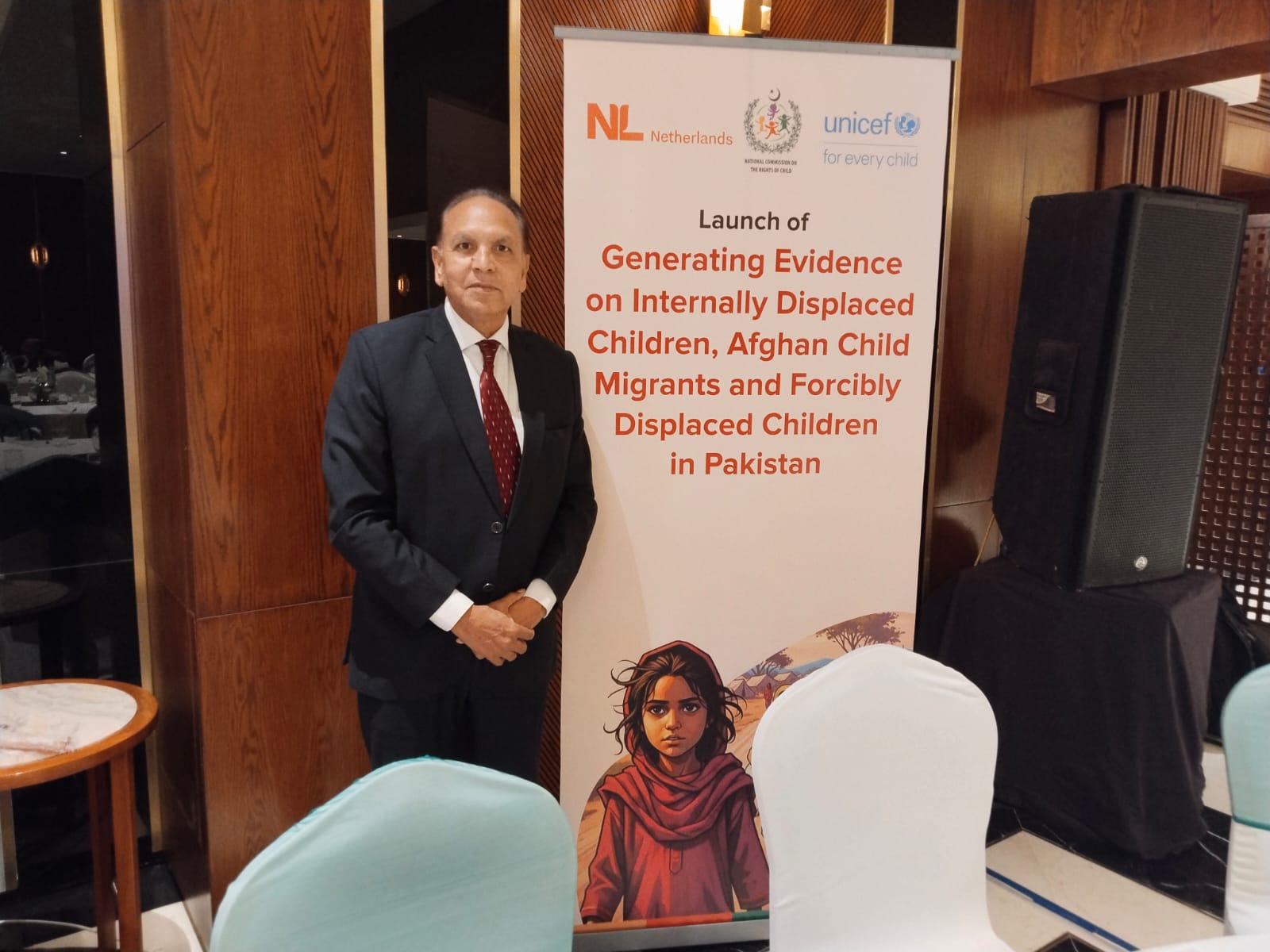
I was honored to participate in the launch of “Generating Evidence on Internally Displaced Children, Afghan Child Migrants and Forcibly Displaced Children in Pakistan,” held on September 22 in Islamabad. The event was organized by the National Commission on the Rights of Child (NCRC) in collaboration with UNICEF and the Embassy of the Netherlands in Pakistan.
This initiative marks an important step toward understanding and addressing the challenges faced by some of the most vulnerable children in our country—those uprooted by conflict, instability, or circumstance. It was truly a commendable effort by NCRC to bring national attention and evidencebased insight to such a critical issue.
The panel featured representatives from all provinces as well as a UN representative, making the discussion diverse, rich, and deeply informative. Participants from various humanitarian, governmental, and childfocused organizations also attended, contributing their perspectives and expressing shared commitment to safeguarding the rights and dignity of every displaced child.
Why This Matters
Internally displaced children, migrant children, and those forced to cross borders often face:
Interrupted education
Health and psychological challenges
Risk of exploitation
Limited access to protection and basic services
By generating reliable data and bringing stakeholders together, this initiative aims to influence policy, strengthen child protection systems, and pave the way for sustainable solutions.
A Collective Responsibility
The event served as a powerful reminder that protecting children is not the duty of one institution alone—it is a shared responsibility. Collaboration between government bodies, international partners, and civil society is essential to ensure that no child remains invisible or unprotected.
I remain grateful for the opportunity to be part of this conversation and stand in solidarity with all those working for a safer and more dignified future for every child in Pakistan.